Best Compound Exercises for Maximum Muscle Growth (2026)
Master compound exercises for maximum muscle growth. These multi-joint movements target more muscle fibers and boost testosterone for faster strength gains.

The Compound Imperative: Why Multi-Joint Movements Build the Complete Human
There is a reason that every serious strength program, from the iron game of ancient Greece to modern periodization theory, has returned again and again to the same fundamental movements. The squat, the deadlift, the bench press, the overhead press, the row. These are not arbitrary selections from an infinite menu of possible exercises. They are the compound exercises, the movements that engage multiple muscle groups and joints in coordinated action, and they represent the most efficient path to meaningful muscular development that the human body allows. To dismiss them in favor of endless isolation work and machine circuits is to mistake the decoration of the temple for its foundation. The Renaissance human understands that physical capability is not a vanity project. It is a prerequisite for a life fully lived, and compound exercises are the vehicle by which that capability is built.
The term compound exercise refers to any movement that requires the coordinated effort of multiple joints and muscle groups to complete. This stands in opposition to isolation exercises, which target a single muscle group in a single joint action. The distinction matters enormously, both physiologically and philosophically. Physiologically, compound exercises trigger a cascade of anabolic signals that isolation work simply cannot replicate. The heavy loading of large muscle groups through compound movements elevates testosterone and growth hormone responses far beyond what bicep curls or leg extensions can achieve. This does not mean isolation work has no place, but it does mean that the foundation of any serious strength program must be built on compound movements. Philosophically, the preference for compound exercises reflects a deeper truth about human movement and human flourishing. We are not meant to move in isolation. We are meant to push, pull, squat, hinge, carry, and rotate as integrated organisms. Compound exercises honor that integration.
The Biomechanical Case for Multi-Joint Movements
The squat stands as perhaps the most instructive example of why compound exercises deserve their primacy. When you descend into a heavy squat, you are not merely working your quadriceps. You are engaging your hamstrings, glutes, adductors, calves, and hip flexors through the kinetic chain. Your core braces against intra-abdominal pressure to maintain spinal integrity. Your erector spinae muscles work eccentrically to control the descent and concentrically to drive you back to standing. Your ankles and hips, complex joint systems designed for exactly this kind of load-bearing work, mobilize through their full range of motion. The barbell squat is a full-body exercise that happens to place maximum load through the lower body. To replace it with leg extensions and leg presses is to exchange a symphony for a single instrument playing in a padded room.
The deadlift extends this logic to the posterior chain with equal force. No other exercise recruits as much total muscle mass in a single movement. The deadlift demands grip strength, lat engagement, thoracic extension, erector spinae function, glute activation, hamstring loading, and quad extension. The hip hinge pattern, which the deadlift teaches and reinforces, is fundamental to nearly every athletic movement humans perform. When you pick something heavy up from the ground, you are deadlifting. When you decelerate during a sprint, you are controlling a hip hinge. When you catch a jump, you are absorbing force through a pattern learned and reinforced by the deadlift. To neglect this movement is to leave an enormous developmental door closed, and the compound exercises that involve hip hinging represent some of the most effective stimuli for muscle growth available.
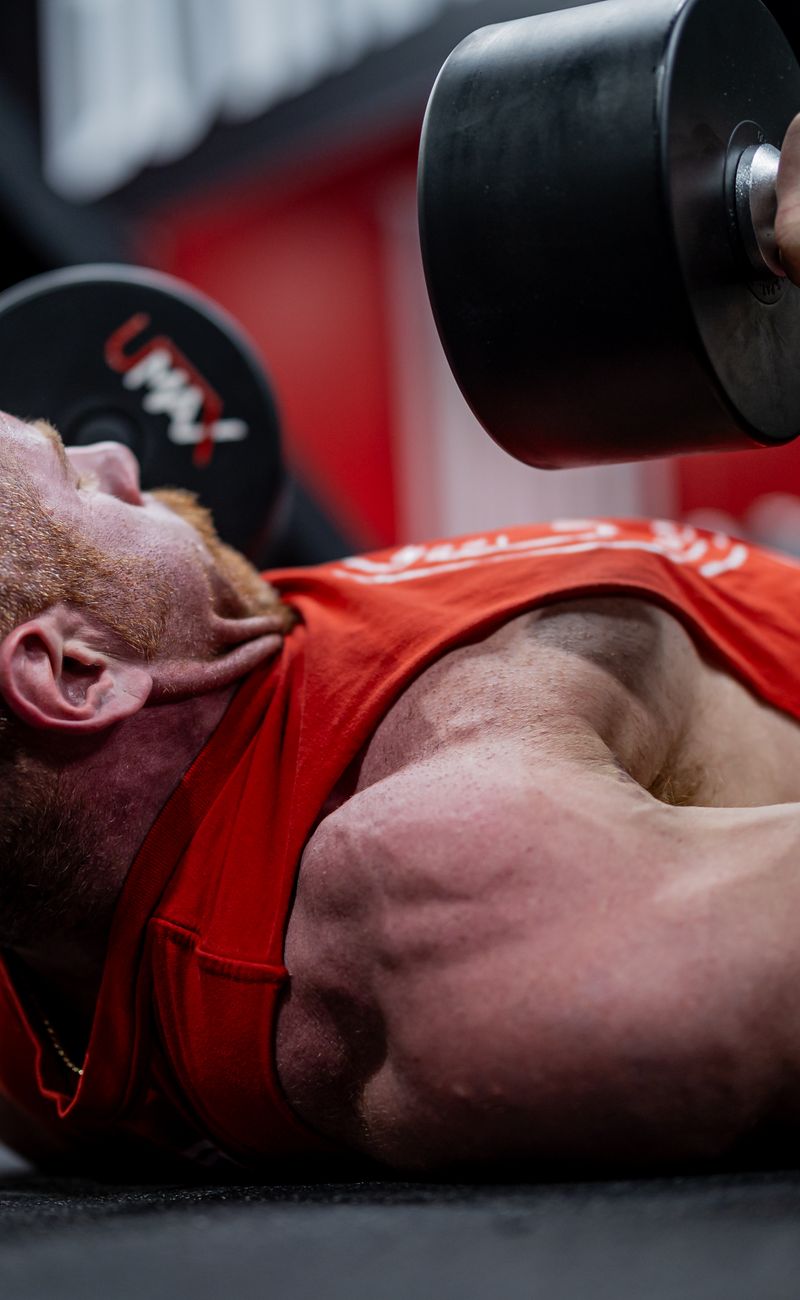
The bench press and overhead press complete the upper body case for compound exercises. The bench press, when performed with proper scapular retraction and depression, engages not just the pectorals but the anterior deltoids, the triceps, the lats as stabilizers, and the entire core as it braces against the bench. The overhead press, performed standing, adds the requirement of anterior core stability and full-body tension that makes it one of the most demanding and rewarding movements in any strength program. These compound exercises build shoulders that are functionally strong, not merely aesthetically prominent. They develop the pressing strength that translates to real-world tasks and the structural integrity that protects the shoulder joint from the dysfunctions that plague those who spend their training time in the sagittal plane alone.
Strategic Compound Exercises: The Supporting Cast
While the big three lifts occupy the throne, other compound exercises deserve their place in any serious program. The pull-up and chin-up represent the bodyweight benchmark of upper body pulling strength. Hanging from a bar and pulling your entire body weight through a full range of motion is a feat of strength that transfers directly to every sport and every physical endeavor. The muscles engaged include the lats, rhomboids, lower traps, biceps, forearms, and the entire anterior core, which must maintain tension to prevent excessive swing. Few isolation exercises can claim such comprehensive engagement. The rowing movements, whether performed with a barbell, dumbbells, cables, or machines, provide the horizontal pulling that the pull-up cannot fully address. Bent-over rows, chest-supported rows, and seal rows build the thickness of the back that pull-ups alone cannot provide.
Lunges and their variations represent the unilateral leg work that compound exercises should include. Walking lunges, reverse lunges, and Bulgarian split squats load each leg independently, addressing strength imbalances and demanding greater stabilization than bilateral squatting allows. The single-leg squat pattern, in its various forms, is essential for athletic development and for the kind of functional strength that makes daily life easier. Carrying variations, whether farmer's walks, suitcase carries, or rack holds, add a dimension of anti-rotation and grip endurance that no machine can replicate. These compound exercises, combined with the primary lifts, create a complete strength program that develops every physical quality the human body is designed to express.
Programming the Compound Exercises for Hypertrophy
Understanding why compound exercises work is only half the battle. The other half is understanding how to program them for maximum muscle growth. Hypertrophy, the enlargement of muscle fibers through training stimulus, follows certain principles that apply especially strongly to compound movements. Volume, defined as total sets multiplied by reps multiplied by load, is the primary driver of hypertrophy in most research synthesis. Compound exercises, because they recruit so much muscle mass, allow for efficient accumulation of high-quality volume. A single heavy set of squats engages more muscle fibers than five sets of leg extensions, and the mechanical tension created by heavy loading drives the hypertrophic response through a pathway that researchers call the "mechanical tension" hypothesis.
Progressive overload remains the non-negotiable principle underlying all effective training. The muscles adapt to the demands placed upon them. If those demands do not increase over time, the hypertrophic stimulus diminishes. This means that compound exercises must be programmed with attention to gradual progression in load, volume, or density. Adding five pounds to the bar every week for a year is a profound stimulus that will build substantial muscle mass on nearly any reasonable program. The key is consistency and the willingness to accumulate fatigue over time. Compound exercises reward patience in a way that many modern trainees have forgotten how to appreciate. The squat that felt impossible last year becomes a warm-up weight this year, and the muscle that grew to support that strength is exactly the muscle that looks like strength.
Training frequency and exercise selection must be considered in context. A program built entirely around the big three lifts will develop tremendous strength but may leave some muscle groups understimulated. Adding accessory compound exercises like pull-ups, rows, lunges, and carries ensures that all major movement patterns receive adequate attention. The horizontal push and pull, the vertical push and pull, the squat pattern, the hip hinge pattern, the carry pattern. These five movement categories, covered by well-selected compound exercises, create a complete strength program. Rotating through different variations and angles also provides novel stimuli that prevent accommodation and promote continued growth.
The Renaissance Human and the Physical Pillar of Complete Development
Leonardo da Vinci spent years studying human anatomy through direct dissection. He understood, intuitively and through rigorous investigation, that the human body was a machine of extraordinary sophistication, and that its capabilities were meant to be developed, not merely maintained. The Renaissance ideal of the complete human included physical cultivation as an essential element. Machiavelli wrote about the importance of being able to handle oneself in combat. Michelangelo's David depicts not an aesthetic abstraction but the full expression of human physical potential. These men understood that the mind and the body are not separate entities but integrated systems, and that the cultivation of one strengthens the capacity for the other.
The compound exercises are, in this sense, a philosophy as much as a training methodology. They represent the understanding that we are not collections of isolated parts but integrated organisms capable of extraordinary feats when all systems work together. A heavy squat is not merely a leg exercise. It is a demonstration of the nervous system's ability to coordinate dozens of muscles in precise timing. It is a test of mental fortitude, of the willingness to place oneself under an immovable load and drive through it by force of will. It is a meditation on the relationship between discomfort and growth, between the temporary suffering of the set and the permanent adaptation that follows. The trainee who has internalized this understanding does not seek the shortcuts of isolation machines and cosmetic training. They seek the fundamental movements that build fundamental strength, because they understand that this strength is not merely physical but human.
The practical conclusion is simple. Build your training around compound exercises. Learn to squat, deadlift, press, row, pull, and carry. Get strong in these patterns first, and build accessory work around them second. The muscle that grows from this foundation will be functional muscle, capable muscle, the kind of muscle that earns its presence on your frame through the demands you have placed upon it. This is not bodybuilding in the modern sense, concerned with aesthetic proportions and isolation sculpting. This is strength training in the classical sense, concerned with the development of physical capability as a pillar of the complete human being. The compound exercises are not the only tools in that endeavor, but they are the foundational tools, and those who master them have mastered something essential about both physical training and the broader project of human flourishing.