Lost Cities of the Ancient World: Discovery and Rediscovery (2026)
Explore the rise and fall of forgotten civilizations and how modern archaeology is uncovering the secrets of ancient lost cities across the globe.
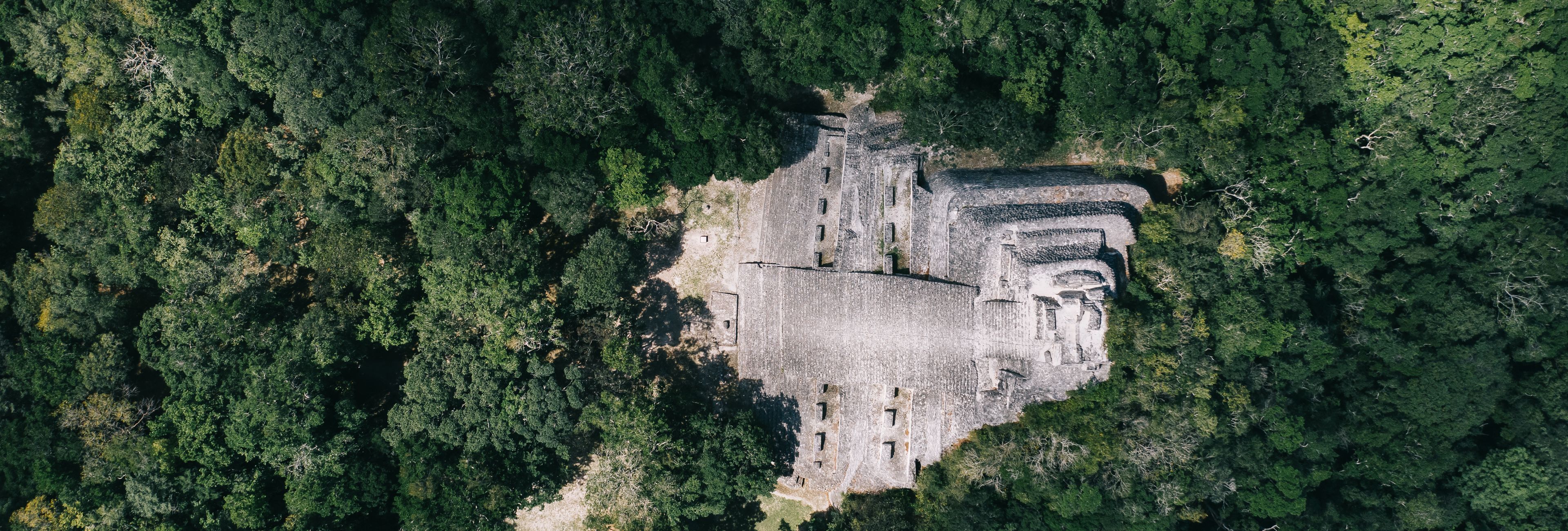
The Archaeology of Forgetting: Why Civilizations Disappear
Somewhere in the mountains of Guatemala, beneath centuries of jungle growth, a great city waited. Its plazas silent, its pyramids unvisited, its carved glyphs unreadable, it had been forgotten so completely that not even the indigenous oral traditions preserved its name. When the American diplomat John Lloyd Stephens encountered the ruins of Copan in 1839, he stood before the remains of a civilization that had flourished while medieval Europe languished in relative obscurity, a metropolis of perhaps 20,000 inhabitants that had simply ceased to exist, leaving nothing but stone and silence. Stephens described the moment with the peculiar mix of wonder and grief that characterizes every encounter with a lost city of the ancient world. We have found so many, and we still do not fully understand why they vanish.
The phenomenon of lost cities troubles our comfortable assumptions about progress and civilization. We like to imagine that great societies leave enduring marks, that pyramids and monuments naturally preserve the memory of those who built them. The archaeology of the ancient world tells a different story. Empires that once commanded millions, cities that ranked among the largest urban centers on Earth, have been erased so thoroughly that we did not know they existed until systematic excavation revealed their remains. The Maya lowlands alone contain an estimated 3,000 to 4,000 undocumented sites. We have not excavated one percent of what time has buried. The question of why civilizations collapse and their cities disappear is not merely academic. It is, perhaps, the most urgent historical question we can ask.
archaeologists have identified several patterns that precede urban abandonment. Environmental degradation appears repeatedly in the archaeological record. The Easter Island society collapsed partly under the pressure of resource exhaustion, the Rapa Nui people cutting down the last palm trees to move their famous moai statues, until the island could no longer support its population. Similar stories emerge from the Mesopotamian urban centers, where salinization of agricultural land gradually strangled cities that had flourished for millennia. Climate change forces migrations. War and conquest scatter populations. Trade route shifts strangle economies. And sometimes, simply, cultural memory fails. Generations pass without maintaining the knowledge required to read ancient inscriptions, and entire cities become unreadable texts, their purposes and inhabitants unknown.
Petra and the Rose-Red City's Second Life
For centuries, Petra existed only in rumors. European travelers spoke of a lost city hidden in the mountains of Jordan, its tombs and temples carved directly into cliffs of colored sandstone, but the Bedouin who controlled the territory kept its location secret. The city had been the capital of the Nabataean Kingdom, a trading empire that controlled the incense routes connecting Arabia to the Mediterranean. At its height under Roman occupation in the first and second centuries CE, Petra may have housed 30,000 people. Caravans loaded with frankincense and myrrh passed through its gates, exotic goods from the mysterious East transformed into fortunes for Nabataean merchants.
The city's decline followed predictable patterns. Trade routes shifted. Maritime alternatives proved cheaper. The Romans built roads that bypassed the mountain fastness. Earthquakes damaged structures that were never properly repaired. The rise of Islamic trade networks further diminished Petra's importance. By the fourteenth century, the city was abandoned entirely, its population scattered, its elaborate water management systems collapsed, the Siq,the narrow gorge that serves as its main entrance,becoming a passage known only to local shepherds. The rose-red city had been lost to everyone except those who lived beside it without understanding what they lived beside.
Johann Ludwig Burckhardt's rediscovery of Petra in 1812 represents one of the most dramatic moments in the history of archaeological exploration. The Swiss explorer was traveling in the region under the pretense of being a Muslim pilgrim when he learned the location of the hidden city from local Bedouin. He convinced them to guide him to the ruins by claiming he wished to sacrifice a goat at the sacred site. When he emerged from the Siq and saw the Treasury,the massive carved facade that dominates Petra's entrance,his reaction was astonishment, though he had to restrain it, for revealing that he was not Muslim in that place would have been dangerous. Burckhardt's account sparked renewed European interest in Petra, interest that eventually transformed the site into a UNESCO World Heritage location and one of the most visited archaeological sites on Earth.
What makes Petra's story significant is not merely the drama of rediscovery but what the rediscovery taught us about Nabataean civilization. We had not known, before Burckhardt, that an Arab-speaking people had built a sophisticated urban civilization in the first centuries BCE and CE, that they had developed remarkable techniques for harvesting desert water and storing it in cisterns, that they had created a distinctive artistic tradition blending Hellenistic, Egyptian, and indigenous elements. The lost city taught us that the ancient world was far more complex than classical education acknowledged, that Arab and desert cultures had produced urban wonders that rivaled Rome and Athens.
The Incas and the Cities Above the Clouds
The Spanish conquistadors knew Machu Picchu existed. They simply did not care. When Hiram Bingham III encountered the ruins in 1911, guided by a local farmer to a ridge high above the Urubamba River, he was not discovering a completely unknown city. The local people had always known there were ruins on the ridge. But Bingham, an American historian from Yale, was the first to recognize what he had found: one of the most remarkable urban creations of the ancient world, a royal estate or religious center built by the Inca in the fifteenth century and abandoned within a century of the Spanish conquest. The Incas had no writing system, no alphabet, and when their empire fell, they had no one left who could explain what the stones meant.
Machu Picchu represents perhaps the most evocative example of how lost cities force us to revise our understanding of human capability. When Bingham published his account, readers around the world were astonished that a civilization they had barely acknowledged had built sophisticated urban centers at 8,000 feet elevation, had cut and fitted massive granite blocks without metal tools or draft animals, had designed cities that incorporated astronomical alignments and hydraulic engineering feats that we are still studying. The Inca had created an empire that stretched 2,500 miles along the Andes, administered by a system of record-keeping using knotted strings called quipus, and yet the Spanish conquest and its aftermath destroyed so much knowledge that we lost track of their greatest achievements.
More recent discoveries in the Inca heartland have compounded the astonishment. Using LiDAR technology,Light Detection and Ranging, which uses laser pulses to map terrain through vegetation,archaeologists have identified an urban network of staggering scale. In the Vilcanota Valley alone, researchers have mapped an estimated 6,000 sites, many of them previously unknown, connected by roads that mirror the imperial infrastructure documented in colonial sources. The lost cities of the Inca are not isolated anomalies but components of an urban system that rivals anything in Europe in its organization and ambition. We are only beginning to understand the scope of what was built and lost in the centuries following 1532.
The Silent Giants: Mohenjo-daro and Harappa
Before Alexander the Great marched through the Punjab, before the Buddha taught in northern India, before the Vedic texts took their final form, there existed a civilization in the Indus Valley that built planned cities with sophisticated drainage systems, regulated trade across thousands of miles, and produced distinctive seals that we cannot read. The cities of Mohenjo-daro and Harappa, excavated in the 1920s, presented archaeology with a puzzle that remains unresolved. This was a Bronze Age civilization that rivaled Egypt and Mesopotamia in its achievements, and yet we do not know what language its people spoke, what gods they worshipped, what political structures they developed. We can trace their trade networks and measure their brick sizes, and we cannot read their writing.
The decline and disappearance of the Indus Valley Civilization illustrates the particular tragedy of historical forgetting. The cities were abandoned around 1900 BCE, possibly due to climate change, possibly due to the shifting course of the Indus River, possibly due to disease or invasion. The survivors dispersed into smaller settlements, their urban traditions fading, their writing system dying with the last people who could read it. When the Indo-Aryan peoples migrated into the region centuries later, they had no memory of those who had built the magnificent cities now overgrown with weeds. The Sanskrit-speaking peoples who eventually created the great civilizations of classical India had no idea that their land had hosted, millennia earlier, urban centers of comparable or greater sophistication.
The rediscovery of Mohenjo-daro in the 1920s forced a fundamental revision of ancient history. Scholars who assumed that civilization had originated in Egypt and Mesopotamia, spreading outward to enlighten barbarous peripheries, confronted evidence of an independent urban tradition that predated many Mesopotamian innovations. The Harappan civilization demonstrated that urban development was not a single experiment confined to river valleys of the Middle East but a pattern that human societies discovered independently in multiple locations. The lost cities of the Indus Valley changed our understanding of what ancient history actually was.
Technology and the New Golden Age of Discovery
The methods that enable modern archaeologists to discover and map lost cities have transformed the field so thoroughly that practitioners speak of a fourth revolution in the discipline, following the development of typological classification, the application of natural science methods, and the shift toward anthropological theory. LiDAR has proven particularly revolutionary, capable of penetrating jungle canopy to reveal the ground surface beneath, showing building foundations, roads, terraces, and water management systems that would be invisible on the ground. A single aerial survey can accomplish what ground crews would need decades to achieve.
In 2018, a LiDAR survey of the Cambodian jungle revealed the lost city of Mahendraparvata, part of the Angkor civilization that flourished from the ninth to fifteenth centuries CE. Researchers had known about Angkor Wat, the massive temple complex that draws millions of visitors, but they had not understood the urban complexity that surrounded it. The survey revealed a vast networked city of interconnected canals, reservoirs, and ceremonial centers extending across more than 1,200 square miles, an urban landscape more extensive than any previously documented in the pre-Columbian Americas. The city had not been lost in the sense of being unknown,it had been misread, its landscape interpreted as natural features rather than human constructions. LiDAR corrected a systematic misunderstanding of what a civilization looked like.
Ground-penetrating radar, satellite imagery analysis, and drone-based surveys have similarly transformed survey methodology. The Globalx project has extended these techniques to underwater archaeology, documenting lost ports and submerged settlements that were overwhelmed by rising sea levels after the last Ice Age. We are discovering that the coastline that ancient mariners knew is not the coastline we inherited, that settlements established when ocean levels were lower now lie beneath tens of meters of water. The ancient world was more urbanized than we imagined, and we are only now developing the tools to perceive its full extent.
What We Find When We Find the Lost: The Ethics and Implications of Rediscovery
The rediscovery of lost cities raises ethical questions that archaeologists have only begun to seriously address. When Bingham visited Machu Picchu in 1911, he removed hundreds of artifacts that are still held by Yale University, generating ongoing disputes with the Peruvian government about rightful ownership. When nineteenth-century European explorers excavated Egyptian and Mesopotamian sites, they often shipped entire monuments to museums in London, Paris, and Berlin, leaving local populations without access to their own heritage. The history of archaeological discovery is also a history of colonial extraction, of Western scholars and institutions claiming the material remains of non-Western civilizations for their own purposes.
Contemporary archaeology has developed codes of ethics attempting to address these historical injustices, but the problems persist in new forms. When tourism transforms archaeological sites into economic resources, local communities may benefit less than international travel companies. When researchers publish discoveries in inaccessible journals, the communities living near sites may learn about their own history only through intermediaries. When the dead are unearthed for scientific study, indigenous and traditional communities often object to the disturbance of ancestral remains. We have gotten better at understanding the past, but we have not always gotten better at treating the present with equivalent care.
The deeper question raised by lost cities concerns what we lose when we lose a civilization. The Harappan script, if we could read it, would probably reveal religious beliefs, political structures, literary traditions, and historical narratives as rich as those of Egypt or Mesopotamia. We would learn what gods they worshipped, what myths they told, what songs they sang. Instead, we have only physical remains, carefully calibrated but fundamentally silent. Every lost city represents not merely an architectural tradition we might reconstruct but a human perspective on existence that we cannot recover. When the Maya abandoned their lowland cities, when the Indus Valley Civilization dissolved into scattered villages, when Petra fell silent, something irreplaceable disappeared from the world.
The City Beneath the Mountain: Why We Cannot Stop Looking
The impulse to discover lost cities is not merely scientific. It is existential. In the ruins of abandoned civilizations, we confront the fragility of our own achievements, the contingency of our own moment in history. We build cities of stone and steel, convinced that our monuments will endure, and then we learn that the Nabataeans built Petra, the Incas built Machu Picchu, and both fell into silence. The cities we build today will someday be lost cities. Our descendants will not know our names, perhaps not even our languages. The question is not whether our civilization will be rediscovered but whether anything will remain to be found.
This knowledge should make us humble, but it also makes the work of archaeology urgent. Every year, urban expansion, agricultural development, and infrastructure projects destroy sites that have survived for millennia. Construction crews in China and India, clearing land for new development, routinely destroy archaeological deposits that have never been systematically documented. The market for antiquities feeds a trade in looted artifacts, removing objects from their contexts and rendering them unintelligible. We are losing the past faster than we can record it. The golden age of discovery is also a race against extinction.
In 1922, Howard Carter opened the tomb of Tutankhamun and found the young king's funerary treasures intact, undisturbed since the priests of the Late New Kingdom sealed the entrance to protect the burial from tomb robbers. Carter's discovery captured the world's imagination because it demonstrated that the ancient world could still surprise us, that vast treasures might still lie hidden, that the dead might still speak if we could only find them. A century later, we have found more than Carter could have imagined, and yet the ancient world continues to surprise. Somewhere, beneath a field in England or a mountain in Peru or a stretch of jungle in Myanmar, another lost city waits for the archaeologists who will eventually find it. We do not know what it will teach us, but we know it will be something we did not know before. That is the promise that every lost city makes, and it is a promise worth keeping.