Roman Senate vs. Athenian Assembly: How Ancient Citizens Built Agency (2026)
Compare how Rome and Athens designed radically different systems for citizen participation, and what these historical experiments reveal about human agency in governance.
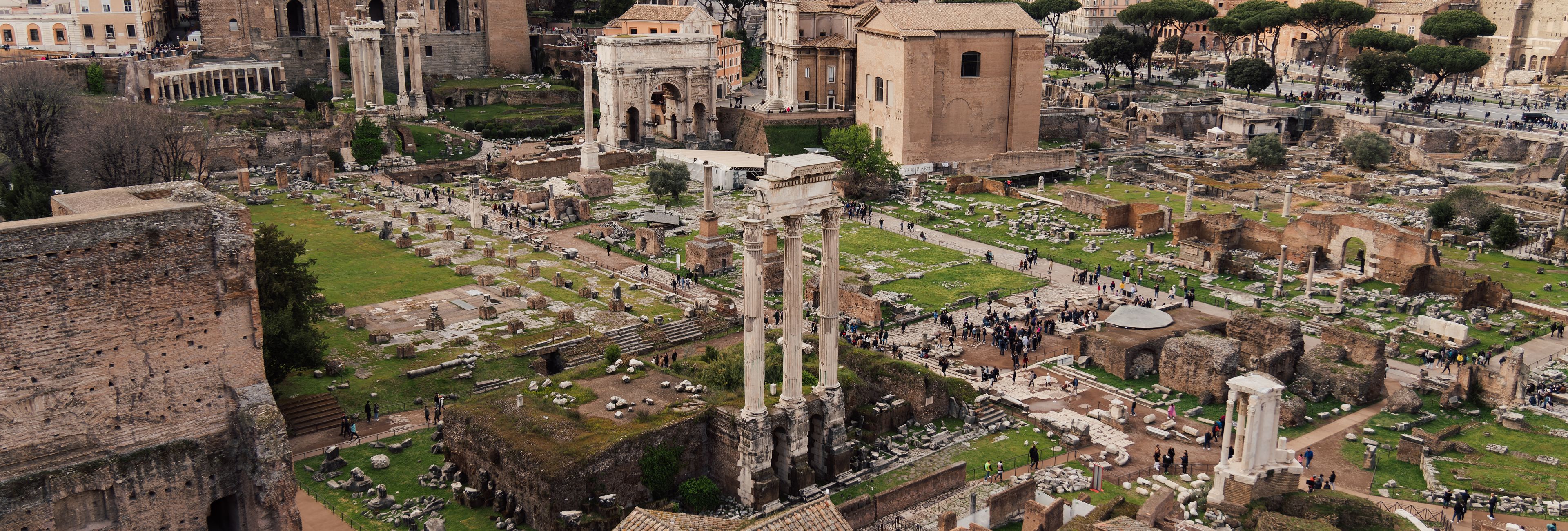
The Birth of Civic Will: Rome and Athens as Laboratories of Human Agency
Two thousand years before the Enlightenment rediscovered the sovereignty of the individual, the cities of Rome and Athens were already running the most ambitious experiments in human agency the world had ever witnessed. They approached the problem from opposite ends of the spectrum: one built an institution designed to slow change and concentrate wisdom in the hands of the experienced, while the other threw open the doors to direct participation by any citizen who cared to show up. These were not mere governmental mechanisms. They were philosophies made flesh, attempts to answer the most fundamental political question there is: how do human beings exercise power over their own collective fate without destroying themselves in the process? The Roman Senate and the Athenian Assembly represent two incompatible but equally serious answers, and studying their triumphs and failures offers us something rare in an age of passive consumption: a mirror held up to what citizen agency actually requires.
The Romans did not trust the people. This is not an insult but an observation, and a crucial one for understanding why the Senate endured for nearly five centuries as the engine of Roman governance. The Senate was not a democratic body in any modern sense. Its members were not elected by popular vote but appointed from the ranks of former magistrates, men who had already proven themselves through a career of public service. The institution rested on a profound belief: that wisdom accumulates with experience, that judgment improves with exposure to consequence, and that the passionate impulses of the multitude must be channeled through the tempered discretion of those who had already learned what it meant to be wrong. The Senate deliberated. It debated. It amended. It slowed the machinery of decision-making until the heat of passion had time to cool into something resembling reason. This was agency, but it was agency of a particular kind, exercised not by the many but on behalf of the many, mediated through the few who had earned the right to speak in their name.
Institutional Memory: How the Senate Turned Experience into Power
When we examine the Senate at its height during the Republic, we find an institution that understood something modern bureaucracies often forget: that knowledge is not merely information but judgment formed through experience. The Senate was composed of men who had served as quaestors, aediles, praetors, and consuls. They had administered provinces, commanded armies, managed crises. When they sat in the Senate chamber, they brought with them not abstract theories but hard-won understanding of how the world actually worked. The institution itself preserved this knowledge across generations through practices like the senatus consultum, formal decrees that accumulated into a body of precedent and custom. New senators learned from old ones. Disputes were resolved not by appealing to written constitutions but by invoking the memory of how similar disputes had been handled before.
The mechanism of agency within the Senate operated through a sophisticated system of consensus-building. A senator who wished to advance a policy did not simply propose it and call for a vote. He cultivated support. He spoke to influential colleagues in the days before formal debate. He anticipated objections and prepared responses. He understood that the purpose of deliberation was not to defeat opponents but to find paths that sufficient numbers could accept. The censor, one of the most powerful offices in the Republic, was responsible for maintaining the rolls of the Senate and could eject members who had brought disgrace upon themselves, a remarkable power that kept the institution's integrity intact for centuries. This was agency channeled through institutions that demanded accountability, that punished corruption, that valued reputation as the currency of political life. The individual senator exercised agency not by speaking loudly but by speaking wisely, by building coalitions through argument and precedent rather than through intimidation or bribery, at least in theory and often in practice.
The Athenian Experiment: Direct Democracy and the Weight of the Vote
Across the Aegean Sea, the Athenians were running a different experiment entirely. Where Rome built walls around wisdom, Athens tore them down and trusted that collective intelligence would emerge from collective participation. The Assembly, or ekklesia, was the sovereign body of Athenian democracy. Any citizen could attend. Any citizen could speak. Any citizen could propose legislation, challenge an existing law, or bring charges against a public official. There were no representatives, no, no intermediate bodies to slow the transmission of will into action. The Assembly met on the Pnyx hill, sometimes forty thousand strong, and when it voted, the vote was immediate and final. This was not delegated agency but direct agency, the raw exercise of collective power without institutional mediation. It was terrifying and exhilarating in equal measure, and it produced some of the greatest cultural achievements in human history alongside some of the most catastrophic political misjudgments.
The Athenians understood that their system required something extraordinary from its participants: not just presence but preparation, not just voting but deliberation. The institution of the prytaneis, rotating committees of citizens who served as a permanent executive council, meant that every citizen could be called upon to govern, to make decisions that affected thousands, to bear responsibility for the city's welfare. The lottery system for selecting magistrates ensured that no single group could dominate, that power circulated through the citizenry like blood through a body. The ostracism, that peculiar institution allowing citizens to exile any individual perceived as too powerful, represented the ultimate assertion of collective agency over individual ambition. Athens believed that the price of freedom was eternal vigilance, that democracy could only survive if citizens treated it not as a spectator sport but as a sacred obligation. The orators who rose to speak at the Pnyx were not elected officials but volunteers who convinced their peers through rhetoric and reason. Demosthenes did not hold office. He stood before his fellow citizens and argued for his vision of Athens, trusting that the assembled multitude would recognize truth when they heard it.
Failure Modes: What These Systems Got Wrong and What They Reveal
Neither system was perfect, and understanding their failures is as important as understanding their successes. The Roman Senate's insistence on aristocratic wisdom eventually calcified into aristocratic privilege. The institution that had preserved the Republic for five centuries became the instrument through which a narrow class defended its interests against necessary reform. When Tiberius Gracchus proposed land redistribution to help the poor, the Senate, remembering its traditions, killed him. When Gaius Gracchus pushed further, they killed him too. The institution had become a mechanism not for wise governance but for the defense of established power against justice. Agency, channeled through institutions that had lost their moral compass, turned from liberation into oppression. The Senate did not fall because it was weak. It fell because it had forgotten why strength was supposed to serve the people rather than crush them.
The Athenian Assembly made its own catastrophic errors. The decision to launch the Sicilian Expedition, which destroyed Athens' military power and ultimately doomed its democracy, was made by the Assembly in full knowledge of the risks. Alcibiades warned them. Nicias warned them. They voted anyway, carried by the momentum of collective enthusiasm into a disaster from which their city never recovered. The execution of Socrates, ordered by a jury of five hundred citizens who believed they were protecting the state from impiety and corruption, demonstrated that direct democracy offers no immunity against the tyranny of the majority. These were not aberrations but consequences of a system that trusted raw participation without adequate mechanisms for protecting minorities or checking mass enthusiasm. Agency without wisdom is merely power, and power without wisdom destroys both its objects and ultimately itself.
The Synthesis: What Ancient Citizens Built That We Are Still Inheriting
When we look at both systems together, a pattern emerges that transcends the particulars of Roman and Athenian politics. Both cities understood that citizen agency is not a given but a construction, not a natural right but a learned practice that must be cultivated through institutions, habits, and expectations. The Romans built institutions that could outlast any individual, that accumulated wisdom across generations, that channeled ambition into service. The Athenians built a culture of participation, where every citizen was expected to be a politician, a soldier, and a philosopher, where the city was not something separate from the people but an expression of their collective will. Both approaches contained truth. Both approaches contained fatal flaws. The lesson is not that one system was right and the other wrong but that citizen agency requires both structure and participation, both wisdom and courage, both the slow accumulation of experience and the willingness to act decisively when action is required.
We live in an age when the language of agency is everywhere and the substance is often missing. We speak of empowerment while building platforms that extract attention rather than cultivate judgment. We celebrate participation while designing systems that reward spectacle over deliberation. The Romans and Athenians remind us that agency is not a feeling but a practice, not a right but a responsibility, not something we possess but something we build through institutions that demand our attention, our preparation, and our willingness to subordinate private interest to common good. The Senate taught us that wisdom matters, that experience accumulates, that institutions can preserve knowledge across generations. The Assembly taught us that no one has a monopoly on truth, that collective intelligence exceeds individual intelligence, that the price of freedom is the labor of freedom. Both lessons remain true. Both lessons remain urgent. The ancient citizens who filled the Forum and crowded the Pnyx were not abstract ancestors but real human beings grappling with the same problem we face today: how to exercise power in ways that serve the long-term flourishing of a community rather than the short-term gratification of factions. They built something. We are still inheriting it. The question is whether we will have the wisdom to understand what they built and the courage to build something worthy of the same inheritance.


