Why Empires Collapse: A Historical Systems Analysis (2026)
Discover the recurring patterns behind civilization collapse. This systems-level analysis examines how empires from Rome to the Maya fell victim to similar structural failures, offering actionable insights for understanding institutional longevity.
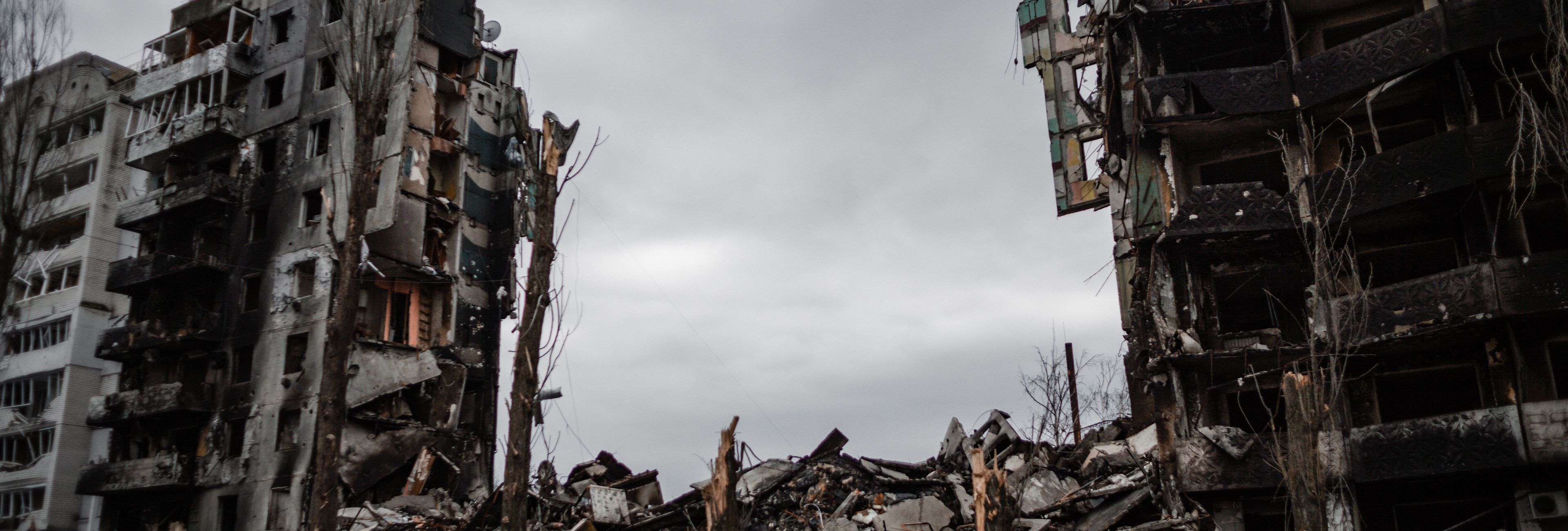
The Archaeology of Power: Why Civilizations Die
The most dangerous moment for any great power is not when it is attacked from without, but when it begins to believe its own mythology. Empires collapse not in a single catastrophic afternoon, but through a slow, compounding failure of the systems that once made them great. The Roman legions did not stop fighting. The Byzantine bureaucrats did not stop counting. The Ottoman viziers did not stop scheming. What changed was the coherence of the whole, the invisible architecture that held disparate parts together. When we examine the anatomy of imperial collapse across twenty-five centuries, we find not one cause but a syndrome: overextension, internal corruption, economic sclerosis, and a fatal loss of adaptive capacity. Understanding these patterns is not merely an academic exercise. It is a mirror held up to the present.
Historians have debated the fall of Rome for two millennia. Edward Gibbon published his magnum opus in 1776 and declared Christianity a principal cause, a claim modern scholarship finds too simple. The truth is more instructive and more uncomfortable. Rome did not fall because it was attacked by superior forces. It fell because it could no longer afford to be what it claimed to be. The empire's infrastructure demanded constant maintenance: roads for legions, aqueducts for cities, bread for populations grown dependent on state generosity. When the revenue base contracted, the first things cut were maintenance and expansion. Roads crumbled. Legions shrank. The empire's reach exceeded its grip, and the contradiction became fatal.
The Weight of the Frontier: Overextension and Imperial Exhaustion
Polybius, writing in the second century BCE, understood something that later empires forgot. Power is not merely a matter of territory. It is a matter of the ratio between what you hold and what you can sustain. The Roman example is instructive precisely because it scaled so successfully for so long. The professional legions of Marius and Caesar were a marvel of military organization. The road network enabled rapid deployment across the Mediterranean basin. The legal system provided a framework for integrating conquered peoples. But this machinery required resources, and resources required expansion, and expansion required more machinery. At some point the recursion became unsustainable.
We see the same pattern in the Mongol Empire, perhaps the most spectacular example of rapid expansion followed by internal fracture in recorded history. Genghis Khan built an empire that stretched from the Pacific to the Danube within a single lifetime. His successors inherited territories they could not govern coherently. The empire fractured into four khanates by 1260, not because the Mongols had lost their martial vigor, but because administering Eurasia required capacities the Mongol pastoral tradition had never developed. The infrastructure did not exist to hold it together. Administrative overextension killed the empire more surely than any external enemy.
The British Empire followed a similar trajectory, though on a different timescale. By 1900, the empire governed a quarter of the world's population and a fifth of its land area. The costs of administration, defense, and infrastructure were staggering. The Indian Army, by far the largest standing force in the British imperial order, consumed resources that might have been deployed elsewhere. The self-governing dominions began to drift toward independence. The Raj faced its first major rebellion in 1857, a warning the metropolitan center chose to interpret as a need for greater control rather than greater accommodation. The empire did not collapse in a day. It eroded slowly, as the costs of maintenance exceeded the benefits of dominion.
The Sclerosis Within: Corruption, Institutional Decay, and Elite Capture
But external overextension is only half the story. Empires collapse from within long before they fall to external enemies. The Ottoman Empire offers a masterclass in the slow-motion collapse of institutional legitimacy. The Janissary corps, once the elite shock troops of Ottoman expansion, became by the seventeenth century a politically entrenched guild more interested in protecting its privileges than in the empire's military effectiveness. The devshirme system, which once selected the brightest Christian boys for elite military and administrative service, was corrupted and eventually abandoned. New military technologies were resisted because they threatened the Janissary monopoly on armed force. The empire did not lack for warning signs. It lacked for the adaptive capacity to respond.
Institutional decay follows a predictable logic. The organizations that build empires are not the organizations best suited to maintaining them. The Roman Senate under the Republic had produced remarkable leaders because it was a competitive arena where survival depended on demonstrated competence. Under the Empire, the Senate became a ceremonial body, its talent pool redirected to court politics and the endless management of imperial favor. Competence ceased to be the primary criterion for advancement. Loyalty to the ruler became paramount. The system optimized for stability and for a time achieved it. But stability without renewal is merely decay deferred.
We find the same pattern in the Byzantine Empire, which survived for a thousand years after Rome's fall only to succumb to a terminal institutional sclerosis that proved fatal when confronted with external pressure. The thematic system that had once enabled Byzantine resilience was gradually undermined by the centralization of the imperial court. Provincial elites captured tax revenues meant for military purposes. Soldiers became mercenaries, fighting for pay rather than for the empire. When the Mamluks and then the Ottomans arrived with more coherent organizations and more compelling causes, the Byzantine machinery simply could not respond. The empire did not fall. It emptied out.
The Economic Choke: Fiscal Crisis and the Loss of Adaptability
Behind every imperial collapse lies an economic dimension, though its relationship to the collapse is rarely simple. Empires are expensive to build and expensive to maintain. The Spanish Empire offers perhaps the clearest example of a power whose economic foundation undermined its political ambitions. Silver from the Americas flowed into Spanish coffers for a century and a half, yet the empire never achieved economic resilience. The inflation this silver caused distorted the Spanish economy, making Spanish manufactures uncompetitive. The wealth was spent on wars rather than invested in productive capacity. When the silver flow declined in the seventeenth century, the empire found itself structurally unable to compete.
The Soviet Union presents a different economic failure mode, though one equally instructive. The command economy achieved remarkable industrialization in the 1930s, building the heavy industrial base that enabled Soviet survival in World War II. But central planning, whatever its strengths in mobilizing resources for specific targets, proved unable to generate the diffuse innovation that market economies produce naturally. The system could copy but not originate. It could produce steel and tanks in quantity but could not generate the consumer goods and flexible responsiveness that a modern economy requires. By the 1970s, the Soviet Union was falling behind technologically at precisely the moment its military commitments required ever greater expenditures. The system could not adapt, and adaptation is the only alternative to collapse.
The economic dimension of imperial collapse is never merely financial. It is always also a story about the relationship between the state and the productive classes, between extraction and legitimacy. Empires that overtax their productive base to fund imperial ambitions eventually find their tax base shrinking faster than their expenditure can be reduced. Empires that debase their currency to meet immediate obligations eventually find their currency rejected. Empires that fail to invest in infrastructure eventually find their administrative reach exceeding their administrative grasp. These are not abstract possibilities. They are documented recurrences across three thousand years of imperial history.
The Moral Factor: Legitimacy, Purpose, and the Collapse of Shared Vision
But perhaps the most insidious cause of imperial collapse is the least tangible: the loss of shared purpose that once animated the imperial project. Empires are not merely administrative arrangements. They are stories that peoples tell themselves about their place in the world. When the story loses its power to inspire, the administrative machinery begins to fail even before the financial base erodes. This is the lesson of the Ming dynasty's slow-motion collapse in the seventeenth century. The civil service examinations that once selected China's most talented minds for administrative service had become exercises in rote orthodoxy by the late Ming period. Innovation was discouraged. The examination system optimized for conformity and produced mandarins who could recite the Classics but could not solve novel problems. The Manchu conquest that followed was enabled by internal weakness more than by Manchu strength.
The American Republic presents an instructive parallel case, though one whose outcome remains uncertain. The Founders constructed a constitutional order designed for a specific purpose: the governance of a republic small enough for its citizens to understand its operations and participate meaningfully in its governance. That republic has become something else in the intervening centuries, an empire in all but name whose global commitments strain a constitutional system designed for a confederation of states. The political class has lost much of its capacity for constitutional thinking, replacing it with procedural manipulation. The financial base depends on the willingness of foreign creditors to hold dollars, a willingness that cannot be taken for granted indefinitely. The demographic foundations are shifting in ways that may strain the social compact. Whether this represents the early stages of imperial overextension or merely the ordinary stresses of a large and complex society remains genuinely uncertain.
The moral dimension of imperial collapse is always retrospective. We can identify the loss of adaptive capacity, the fiscal deterioration, the institutional decay. But these are symptoms of a prior loss: the loss of the animating purpose that made the sacrifices of empire seem worthwhile. When the citizens of an empire no longer believe the empire serves purposes larger than the enrichment of its elites, the empire has already fallen in the only dimension that ultimately matters. The administrative machinery may persist for generations, but the spirit has departed.
The Paradox of Strength: Why Power Creates Fragility
There is a bitter irony at the heart of imperial history. The very mechanisms that build empires are the mechanisms that eventually destroy them. Success creates complacency. Expansion creates overextension. Centralization creates rigidity. The Roman legions that conquered the Mediterranean also created the garrison obligation that would eventually overstretch the imperial budget. The Byzantine thematic cavalry that saved the empire at the siege of Constantinople also created the military aristocracy whose political ambitions would eventually fracture imperial coherence. The British Navy that made the empire possible also created the global commitments that would eventually exhaust imperial capacity.
This paradox deserves more attention than it typically receives. Empires optimize for their own perpetuation, and the optimization process creates vulnerabilities that are not visible until they become fatal. The imperial machinery becomes too large to fail, and too large to adapt. The elites who benefit from the imperial order become more interested in protecting their position than in serving the imperial purpose. The citizens who bear the costs of empire become less willing to bear them as the benefits become more concentrated. These are not mechanical failures. They are moral failures, failures of imagination and will, and they are reversible until the moment they become irreversible.
The lesson for any society that aspires to longevity is not to avoid empire, but to build institutions capable of renewal. The most resilient empires in history were those that found ways to periodically reset their internal logic, expelling corrupt elites, reforming administrative systems, rediscovering their animating purpose. The Edo period in Japan, with its deliberate policy of national isolation, represented a kind of managed contraction that enabled institutional coherence for two and a half centuries. The Roman Empire's most successful period under Diocletian and Constantine involved a radical restructuring that acknowledged the empire had grown beyond what its existing institutions could manage. These were not solutions to the paradox of imperial strength, but they were adaptations that bought time.
Patterns for the Present: What Empires Tell Us About Our Moment
The question that concerns us is not merely historical. It is whether the patterns of imperial collapse operate in our present, and whether we have the wisdom to recognize them in time. The United States remains the dominant global power, but its position faces challenges that would be recognizable to any Roman senator or Ottoman vizier. The global financial system depends on the dollar's reserve currency status, a privilege that cannot be taken for granted indefinitely. The military commitments span a planet whose complexities exceed any comprehensive strategic understanding. The domestic political system has shown signs of dysfunction that undermine the coherent projection of power. The infrastructure crumbles. The social fabric frays.
But this is not a counsel of despair. Empires have collapsed before, and new orders have emerged from their ruins. The lesson of history is not that power inevitably corrupts and empires inevitably fall, but that power requires continuous renewal and empires require continuous adaptation. The question for any civilization is not whether it will face challenges to its coherence, but whether it will have the institutional capacity to respond. Systems that can learn and adapt survive. Systems that cannot, regardless of their apparent strength, eventually fail.
The Renaissance human, as a type, is not an imperial project but a civilizational possibility. What distinguishes that possibility from imperial hubris is precisely the capacity for self-renewal, the willingness to acknowledge error, the commitment to mastery across domains rather than domination of any single one. Empires collapse when they mistake dominance for purpose, when they confuse the accumulation of power with the service of human flourishing. The lessons of imperial history are not instructions for building a better empire. They are warnings about the fragility of any order that cannot justify itself by reference to something larger than its own perpetuation. That warning remains urgent, as it has remained for three thousand years, for those with ears to hear.