Best Mountain Train Journeys Around the World: Scenic Alpine & Scenic Routes (2026)
Discover the most breathtaking mountain train journeys across the globe, from the Swiss Alps to the Japanese Highlands. This guide covers iconic scenic rail routes perfect for adventure seekers and train enthusiasts in 2026.
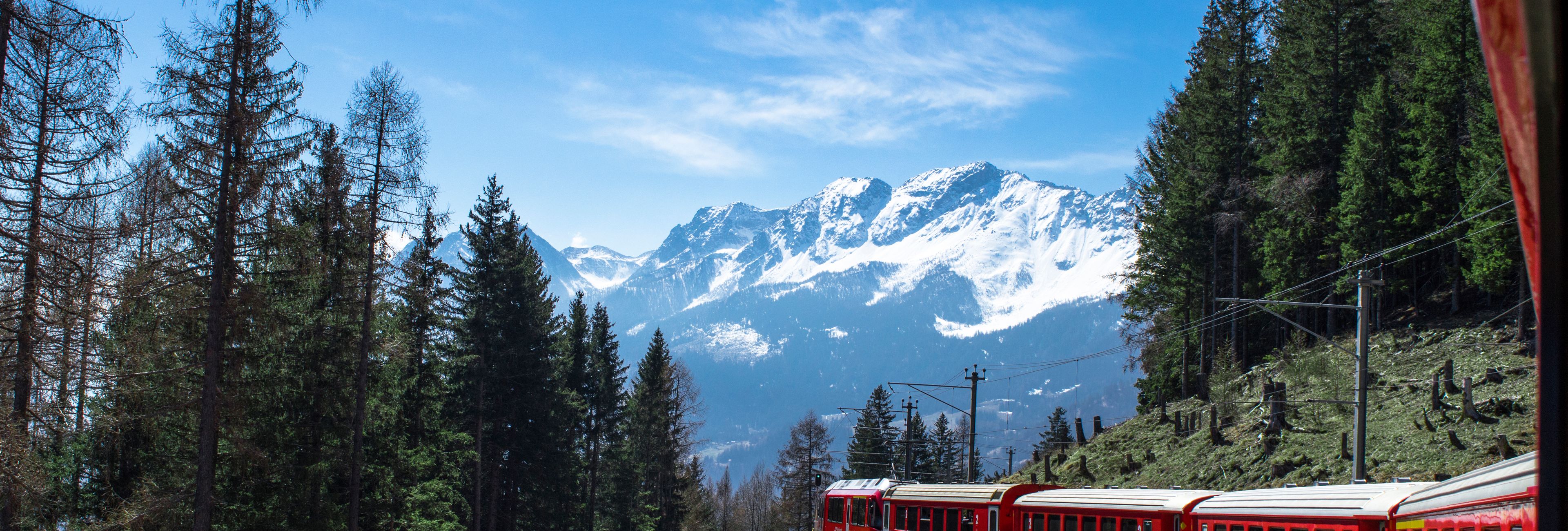
The Last Great Education: Why Mountain Train Journeys Matter
There is a particular quality of light that exists only above the tree line. It arrives when the carriage rounds a bend in the track and suddenly the valley drops away beneath you, revealing a world of granite and ice that seems unconnected to the ordinary concerns of human existence. In that moment, sitting in a worn leather seat with your forehead pressed against glass that carries the fingerprints of a thousand previous travelers, you understand why the Grand Tour tradition endures even in an age of instant transit. The mountain train journey is not merely transportation. It is education of the most profound kind, a slow immersion in geography that no aerial view can replicate and no guidebook can adequately describe.
The appeal of mountain train journeys rests on a simple paradox: the slower you move through a landscape, the more you see of it. Modern travelers have been conditioned to measure journeys by their duration, to optimized routes for maximum efficiency. The great scenic alpine and mountain railway routes refuse this logic entirely. They were built not despite the difficulty of the terrain but precisely because of it, engineered feats that thread their way through valleys, over passes, and around cliffsides in defiance of common sense. To travel them is to participate in a century-old conversation between human ambition and geological patience. These routes have carried poets and politicians, grandmothers and schoolchildren, and they remain among the most transformative travel experiences available to the curious wanderer in 2026.
The Glacier Express: Switzerland's Iron Commitment to Wonder
The Glacier Express, which has connected Zermatt to St. Moritz since 1932, remains the most celebrated of all mountain train journeys for good reason. This is not a route that merely passes through the Alps; it interrogates them. The journey covers 291 kilometers and crosses 291 bridges and tunnels in approximately eight hours, a logistical absurdity that transforms the Alps from an impediment into a spectacle. Passengers aboard the distinctive red carriages witness theRhone valley, the Furka Pass, the Oberalp Pass, and the Landwasser Viaduct in sequence, each segment offering a distinct chapter in the geological history of the range.
What distinguishes the Glacier Express from other alpine routes is its deliberate theatricality. The Panoramic cars, with their curved windows designed to maximize the visual field, were an engineering response to the question of how to make mountain scenery feel immersive. Whether the train is navigating the deep gorges of the Upper Rhine or emerging from tunnels to reveal meadows populated by the same hardy cattle that have grazed these slopes for centuries, the experience remains one of sustained visual astonishment. The dining car, with its white tablecloths and regional cuisine, reinforces the sense that this is not ordinary transit but a curated encounter with one of Europe's most magnificent landscapes. Travelers who dismiss the Glacier Express as tourist spectacle miss the point entirely. The crowds exist precisely because the experience justifies them.
The Bernina Express: A Railway That Climbs to Heaven
If the Glacier Express is Switzerland's most famous mountain train journey, the Bernina Express represents its more dramatic and less celebrated sibling. The route from Chur to Tirano in Italy traverses the Albula line and the Bernina line in their entirety, achieving something that railway engineers of the late nineteenth century considered impossible: a seamless connection between the northern and southern slopes of the Alps using rack-and-pinion technology to navigate gradients that would defeat conventional locomotives. The Bernina Pass, at 2,253 meters above sea level, represents the highest point reached by any adhesion railway in the world, a distinction that transforms the journey into something approaching the heroic.
The landscape shifts so dramatically over the course of the Bernina Express that passengers frequently find themselves uncertain whether they have traveled through multiple countries rather than simply crossed a mountain range. The upper portions of the route pass through treeless zones of alpine tundra where the cold and wind permit only the most resilient vegetation. The descent toward Tirano reveals chestnut forests and Mediterranean flora, the temperature rising perceptibly as the train drops toward the Italian plain. This compression of climatic zones, this apparent elimination of the thousands of kilometers that should separate arctic conditions from Mediterranean warmth, constitutes one of the most extraordinary geographic experiences accessible by rail. The Moraine curve at Brusio, where the track spirals to achieve elevation gain that would otherwise require a tunnel, has become one of the most photographed railway moments in the world, and the image, however familiar, fails to convey the physical sensation of the train tilting through the spiral.
The West Highland Line: Scotland's Romance With Weather
The West Highland Line, connecting Glasgow to Oban and Mallaig, offers a different kind of mountain train journey, one shaped less by altitude than by the particular melancholy of the Scottish Highlands. This is not alpine grandeur in the conventional sense. There are no eternal snows, no villages perched impossibly on cliff faces. What the West Highland Line offers instead is a landscape of extraordinary atmospheric complexity, where light and cloud interact with moorland and sea loch to produce an endless succession of moods. The train passes through the longest viaduct in Scotland at Glenfinnan, and the Harry Potter associations have drawn crowds that sometimes obscure the genuine sublimity of the location, but those who travel the route outside of peak season discover a journey of profound Celtic atmosphere.
The section between Bridge of Orchy and Arisaig constitutes the heart of the West Highland Line experience. Here the railway hugs the coast, offering views across the Inner Hebrides that on clear days extend to the peaks of Rum and Eigg. The train crosses the challenging and remote terrain of Rannoch Moor, a genuine wilderness that the railway somehow penetrates without domesticating it. The journey to Mallaig, where the track terminates at a small fishing port whose smoke curling upward from cottage chimneys suggests a quality of life unconnected to the modern world, rewards travelers who arrive by rail with a sense of having reached somewhere genuinely remote. The connection to the Isle of Skye via the ferry at Mallaig extends the mountain and coastal experience further, but the train journey itself requires nothing beyond itself to justify the passage.
The Flåm Railway: Norway's Vertical Meditation
Norway's Flåm Railway, connecting the inland town of Flåm to the mountain station at Myrdal, covers just 20 kilometers of track but achieves in that brief distance what many railways cannot accomplish across hundreds. The descent from Myrdal to Flåm drops 864 meters in altitude, an average gradient of approximately one in eighteen that ranks among the steepest in the world. The engineering required to achieve this descent safely, threading the track through tunnels and past waterfalls while maintaining grades that remain navigable, represents a remarkable achievement of applied ingenuity. Passengers who board at Myrdal begin in a landscape of high mountain plateaus where birch trees struggle against the wind and winter lingers even in summer. Twenty minutes later, they arrive in the narrow fjord valley where subtropical vegetation thrives in the shelter of surrounding peaks.
What renders the Flåm Railway particularly significant among mountain train journeys is its relationship to water. The route passes the Kjosfossen waterfall, where a short platform stop permits passengers to experience the physical presence of water falling fifty-nine meters adjacent to the railway. The sound and spray penetrate the carriage in a manner that reminds human beings of their fundamental smallness relative to hydrological forces. The tunnel sequence at the upper end of the route, where the train emerges and re-enters darkness repeatedly as it descends, creates a rhythmic experience that many travelers find almost hypnotic. Flåm itself, at the head of the Aurlandsfjord, serves as a base for further exploration of western Norway's fjord landscape, but the railway itself rewards the journey whether or not travelers choose to continue their exploration by ferry or road.
The Darjeeling Himalayan Railway: Time Travel in the Eastern Himalayas
The Darjeeling Himalayan Railway, a UNESCO World Heritage Site since 1999, represents a different category of mountain train journey entirely. This narrow-gauge railway, constructed between 1879 and 1881 to connect the British colonial hill station of Darjeeling with the plains at Siliguri, achieves something that no other railway on this list attempts: the preservation of a nineteenth-century mode of travel that has remained essentially unchanged for over a century. The locomotives, including the iconic B-Class steam engines that remain in service, the diesel locomotives that replaced some steam services, and the remarkable "toy train" carriages that wind through streets shared with pedestrians and traffic, create an experience of anachronism that more sophisticated travelers find profoundly moving.
The route itself, climbing from approximately one hundred meters above sea level at New Jalpaiguri to around two thousand meters at Darjeeling over a distance of about eighty kilometers, passes through an ecological gradient that reflects India's remarkable biodiversity. Tea plantations give way to subtropical forest, which yields to temperate woodland, which in turn surrenders to Himalayan oak and magnolia forest as the altitude increases. The train negotiates numerous sharp curves on its way to the summit, including the famous Batasia Loop where the track spirals to gain elevation at a point overlooking the Kanchenjunga massif. The view of the world's third-highest mountain, its peak perpetually wreathed in cloud, from the viewing platform at Batasia constitutes one of the great railway moments of the world. Travelers to Darjeeling in 2026 will find the town transformed by tourism and development, but the railway itself remains a functioning artifact of the British imperial era, carrying passengers through landscapes that Victorian botanists and administrators would recognize.
The Future of Mountain Train Journeys in the Agentic Age
As artificial intelligence and autonomous systems increasingly mediate human experience, the appeal of mountain train journeys may deepen rather than diminish. There is something fundamentally human about occupying a physical space that moves slowly through a landscape, about being present in a body that experiences altitude and descent through the inner ear, about watching snow accumulate on a mountainside through glass that bears scratches from previous passengers. These experiences resist optimization in ways that increasingly characterizes modern life. The mountain railway does not offer the fastest route between two points. It offers instead an education in patience, in attention, in the pleasures of a journey that refuses to be reduced to its endpoints.
The routes surveyed here represent the finest of what mountain train journeys can offer: engineering achievement wedded to natural splendor, physical comfort enabling contemplation, a social space where strangers become temporary companions in wonder. They are not destinations that travelers visit and forget. They are experiences that reshape the understanding of landscape, of distance, of what it means to move through the world in a body that remains stubbornly physical in an increasingly virtual age. The railways persist because they serve purposes that no other mode of transit can serve. In an era when artificial agents increasingly carry out tasks on our behalf, we may find ourselves valuing more intensely those experiences that require our presence in time and space. The mountain train journey asks nothing of us except attention. This, in an age of distraction, is everything.