Kyoto Cultural Immersion: A Guide to the Zen Aesthetic in 2026
An exploration of Kyoto cultural immersion through the lens of Zen philosophy and traditional Japanese architecture for the modern traveler.

The Philosophy of Kyoto Cultural Immersion
To enter Kyoto is to step into a living archive of human discipline. While the modern world prizes speed and the frictionless delivery of services, the ancient capital of Japan operates on a different clock. True Kyoto cultural immersion is not about visiting a checklist of shrines or taking photographs of orange gates. Instead, it is a deliberate practice of observing the tension between permanence and impermanence. This is the essence of wabi sabi, the aesthetic appreciation of the imperfect and the transient. For the agentic human, Kyoto serves as a laboratory for studying how a society can maintain a rigorous commitment to traditional craft while existing within a hyper technological state. The city does not merely preserve history; it breathes it through the precise movements of a tea ceremony or the calculated placement of a single rock in a dry landscape garden. We find that the act of traveling here should be treated as a form of study, akin to the Grand Tour of the eighteenth century, where the destination is not a place but a state of heightened perception.
The experience begins with the understanding that the city is designed as a series of thresholds. Every gate, every sliding shoji screen, and every meticulously raked gravel path is intended to strip away the noise of the external world. When we engage in Kyoto cultural immersion, we are participating in a ritual of subtraction. By removing the distractions of the digital age, we are forced to confront the immediate physical reality of our surroundings. This mirrors the Stoic practice of voluntary hardship or the Zen pursuit of emptiness. The architecture of the city, from the towering pagodas of Higashiyama to the quiet corridors of the Imperial Palace, reflects a profound understanding of spatial harmony. It is a reminder that the environment we inhabit shapes the quality of our thoughts. If we seek to expand our cognitive capabilities, we must first place ourselves in environments that demand a higher level of presence and attention.
Walking through the Gion district at dusk, one notices that the beauty of the city lies in its restraint. The wooden machiya houses do not shout for attention; they whisper of centuries of continuity. This restraint is a physical manifestation of a mental discipline that prizes depth over breadth. In an era of algorithmic optimization, the slow pace of a traditional Kyoto stroll is a revolutionary act. It is a rejection of the efficiency mandate in favor of an experiential depth that cannot be quantified by a data point. This is where the traveler evolves into a student of culture, recognizing that the true value of the journey lies in the moments of unplanned discovery and the quiet observation of a craft perfected over ten generations.
Architectural Mastery and Zen Gardens
The physical landscape of Kyoto is a masterclass in the intersection of nature and artifice. To understand Kyoto cultural immersion, one must spend hours in the rock gardens of Ryoanji. Here, fifteen stones are arranged in a sea of white gravel, yet no matter where the viewer stands, one stone is always hidden from sight. This is not a puzzle to be solved but a lesson in the limits of human perception. It teaches us that our perspective is always partial and that the pursuit of total knowledge is an asymptotic journey. The garden is a tool for meditation, a physical manifestation of the void that allows the mind to expand. For the modern builder or thinker, these spaces provide a blueprint for how to create systems that encourage reflection rather than consumption.
The contrast between the austere Zen gardens and the opulent gold leaf of Kinkakuji reveals the duality of the Japanese spirit. One represents the beauty of nothingness, while the other represents the peak of worldly achievement. Both are essential to the complete human experience. We see this same tension in the way the city integrates the natural world into its urban fabric. The philosopher explores the moss gardens of Saihoji, where the greenery is not merely maintained but curated as a living sculpture. The patience required to cultivate such a landscape over centuries is a direct challenge to the short termism of the contemporary age. It suggests that the most meaningful achievements are those that require a time horizon extending far beyond a single human life.
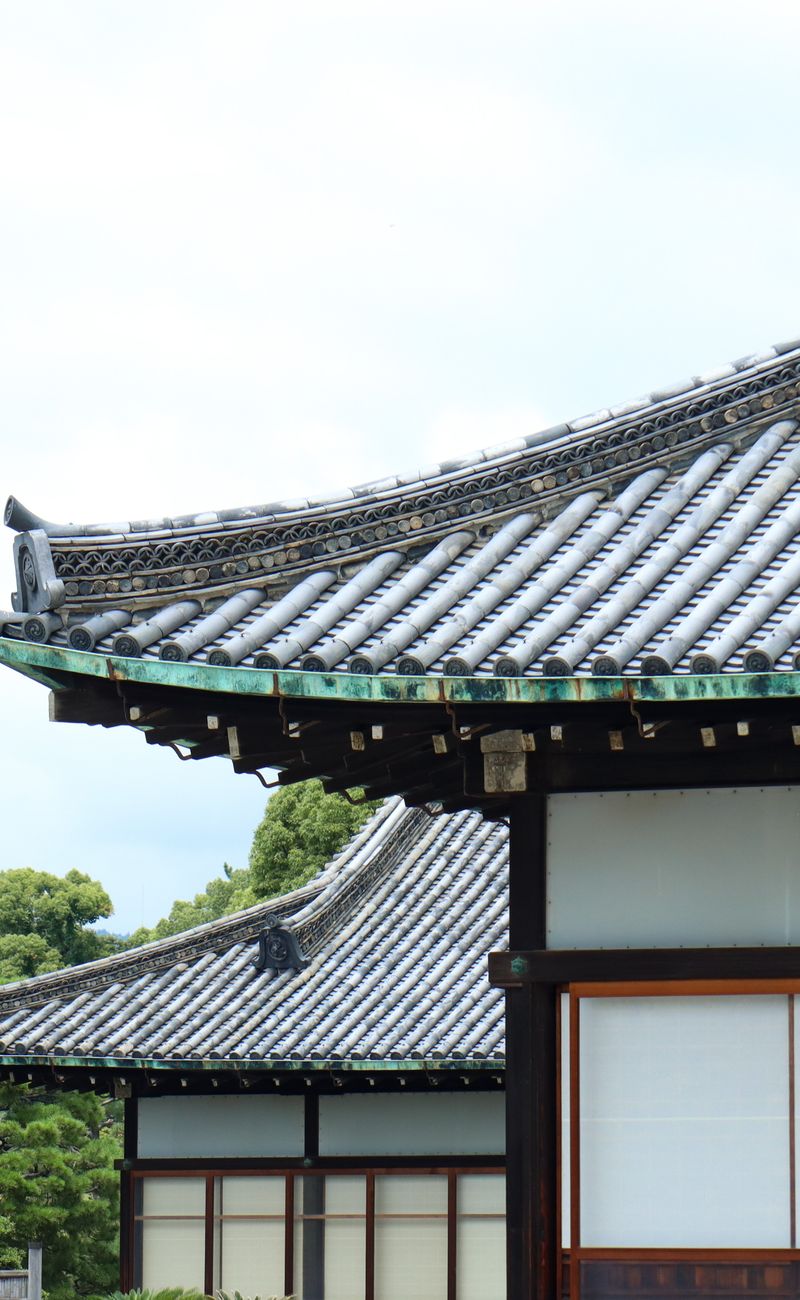
Exploring the architecture of the temples also reveals a sophisticated understanding of materials. The use of cedar, paper, and straw creates a breathable environment that responds to the seasons. There is no attempt to dominate the landscape; instead, the structures lean into the topography of the surrounding mountains. This organic integration serves as a reminder that the most effective systems are those that work in harmony with their environment rather than against it. When we analyze these structures, we are not just looking at old buildings but at a philosophy of sustainable existence. The precision of the joinery, often achieved without a single nail, speaks to a level of mastery that transcends mere technical skill and enters the realm of spiritual devotion.
The Ritual of Tea and the Art of Presence
No exploration of Kyoto cultural immersion is complete without an engagement with the Way of Tea, or Chado. The tea house is a sanctuary of equality and presence. Upon entering, one must often crawl through a small door, a physical act of humility that strips away social rank and ego. Inside, every movement is choreographed with a level of precision that borders on the mathematical. The whisking of the matcha, the placement of the bowl, and the silence between words are all components of a larger symphony of mindfulness. This is not a performance for an audience but a shared meditative experience between the host and the guest.
The tea ceremony embodies the concept of ichigo ichie, which translates to one time, one meeting. It is the recognition that this specific moment, with these specific people in this specific space, will never happen again in exactly the same way. This realization transforms a simple act of drinking tea into a profound exercise in existential awareness. In the context of the Renaissance human, this is the practice of being fully agentic in the present moment. While we plan for the future and learn from the past, the only place where action actually occurs is the now. The tea ceremony forces us to anchor ourselves in the sensory details of the immediate environment, from the smell of the incense to the texture of the ceramic bowl.
This commitment to presence extends to the culinary arts of Kyoto, particularly Kaiseki. This multi course meal is a seasonal narrative told through food. Each dish is a reflection of the current micro season, utilizing ingredients at their absolute peak of freshness. The presentation is as important as the taste, with the plating mirroring the natural landscapes of Japan. To eat Kaiseki is to consume the essence of the land and the time. It is a reminder that we are biological entities tied to the rhythms of the earth, regardless of how many digital layers we wrap around our lives. The discipline required to prepare these meals is a testament to the pursuit of excellence in the smallest of details, a core pillar of the agentic life.
Navigating the Tension Between Tradition and Modernity
Kyoto exists as a bridge between the ancestral and the futuristic. While the city is famous for its temples, it is also a hub of high tech industry and cutting edge research. The true value of Kyoto cultural immersion lies in observing how these two seemingly opposite forces coexist. In the workshops of the Nishijin textile district, weavers use ancient looms to create fabrics that are then integrated into modern fashion. This is not a nostalgic clinging to the past but a strategic synthesis of old and new. It is the definition of the Renaissance human: the ability to draw from the deep well of history to solve the problems of the future.
The challenge for the traveler is to avoid the trap of romanticizing the past. It is easy to view Kyoto as a museum, but to do so is to miss the living pulse of the city. The real insight comes from seeing how the discipline of the monastery informs the discipline of the laboratory. The same focus on precision, the same respect for the process, and the same dedication to mastery are present in both the calligraphy brush and the semiconductor. By recognizing this thread, we understand that the tools change but the fundamental requirements for human excellence remain constant. Mastery is not about the medium; it is about the relationship between the creator and the craft.
As we navigate the streets of Kyoto, we are reminded that the most enduring systems are those that allow for evolution without losing their core identity. The city has survived fires, wars, and the pressures of globalization by remaining anchored in its philosophical foundations. For those of us seeking to build things that outlast our creators, Kyoto provides a living example of institutional longevity. It teaches us that permanence is not achieved through rigidity but through a consistent application of values across changing contexts. The agentic human does not fear the future nor blindly worship the past; instead, they synthesize both into a coherent path forward.
Conclusion: The Return from the Zen Landscape
Leaving Kyoto is not an end but a transition. The goal of Kyoto cultural immersion is to carry the silence of the rock garden and the precision of the tea ceremony back into the chaos of daily life. We return not with souvenirs, but with a recalibrated sense of attention. The ability to find a moment of stillness in a crowded city or to approach a complex project with the patience of a moss gardener is the true reward of this journey. We have seen that the highest form of human capability is not found in the accumulation of information, but in the refinement of perception.
The experience of Kyoto reinforces the thesis that we are the architects of our own consciousness. By choosing the environments we inhabit and the rituals we practice, we can cultivate a mind that is both sharp and serene. The city stands as a testament to the power of intentionality. Whether it is the placement of a stone or the design of a city, everything in Kyoto is a choice. In the same way, the life of the agentic human is a series of deliberate choices aimed at the pursuit of mastery and the expansion of the soul. We leave the ancient capital with a renewed commitment to the Renaissance ideal: the integration of the physical, the mental, and the spiritual into a single, potent expression of human existence.