Best Train Station Food Experiences: A Culinary Journey (2026)
Discover the world's most incredible train station food experiences. From Japan's pristine bento boxes to Italy's apertivo culture, explore culinary treasures hidden in transit hubs worldwide.
The Station as Sanctuary: Rediscovering Train Station Food
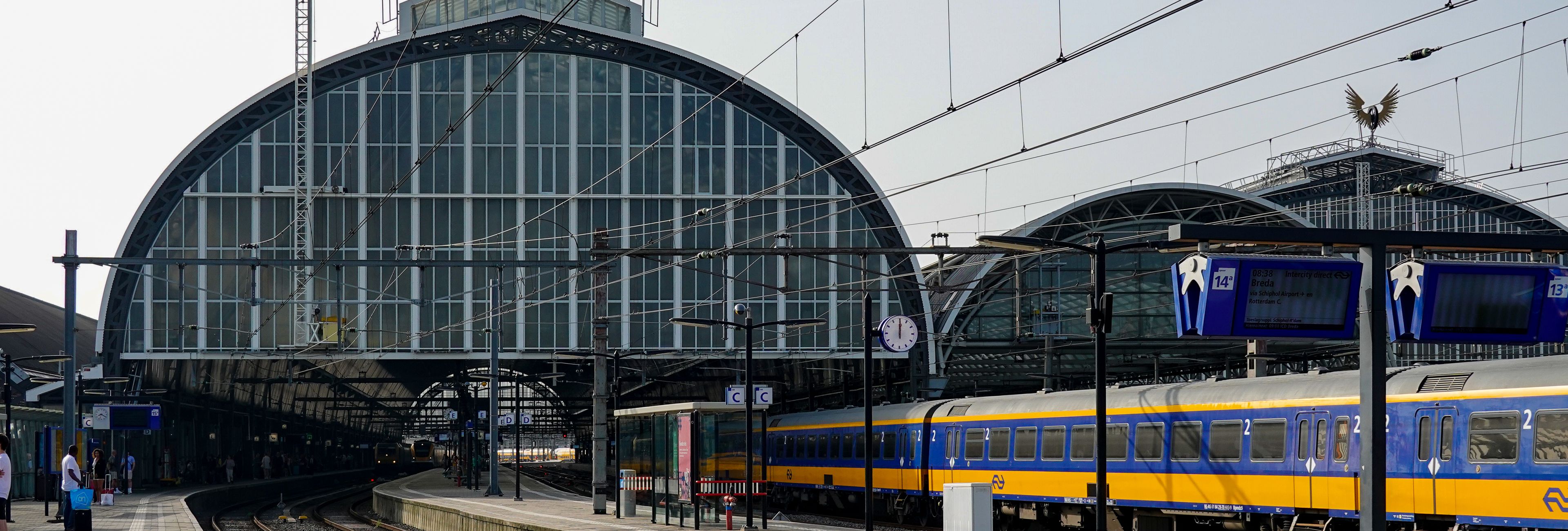
There is a particular quality of light in grand rail stations at midday, a diffuse golden glow filtered through iron and glass that transforms the hurried commuter into something more contemplative. I first noticed it years ago in Wien Westbahnhof, sitting with a plate of Wiener Schnitzel at a corner table of a restaurant that had seen better decades, watching travelers flow past like particles in a current. The schnitzel was perfect: thin, golden, trembling with heat, accompanied by nothing more than a wedge of lemon and a small pot of cranberry jam that the waiter insisted I try. It occurred to me, in that unremarkable hour, that train station food has been unfairly maligned. We have collectively forgotten that the great stations of Europe were designed not merely as transit hubs but as palaces of departure, and within palaces, one should eat well.
The degradation of train station cuisine is a relatively recent phenomenon, a casualty of the postwar acceleration toward efficiency and the rise of fluorescent-lit franchises offering soggy sandwiches wrapped in plastic. But this was not always the case. The grand stations of the nineteenth and early twentieth centuries were conceived as destinations in themselves, complete with grand dining halls that rivaled the finest hotels. The original Penn Station in New York, demolished in 1963 in what remains one of American architecture's great shames, featured a dining room that could seat thousands beneath vaulted ceilings adorned with murals depicting the triumph of civilization through transportation. The Gare du Nord in Paris was built to accommodate not merely trains but the entire ritual of French departure, which necessarily includes a proper meal. To understand train station food as merely convenient fuel is to miss several centuries of culinary ambition.
Tokyo Station: The Temple of Precision
If any station in the modern world has preserved the grand tradition of station dining while also pushing it into the future, it is Tokyo Station. The original Edo-maru brick building, completed in 1914 and modeled after Amsterdam's Central Station, survived the wartime bombing that decimated so much of Tokyo and now stands as a monument to an era when stations were built to last centuries. Within and beneath this architectural treasure lies one of the most concentrated collections of culinary excellence found anywhere on earth, all of it organized with the precision that defines Japanese culture at its best.
The basement level of Tokyo Station, known as Yaesu Chikagai, stretches for what feels like miles beneath the station proper, a subterranean city of restaurants, specialty food shops, and convenience stores that would take weeks to fully explore. But the true pilgrim of train station food will make directly for the two establishments that have defined Tokyo Station cuisine for generations. The first is Tamaruya, a specialty shop that has sold its acclaimed beef croquettes for over sixty years. These are not the industrial approximations found in train station food courts worldwide but rather monuments to the Japanese philosophy of perfection through repetition: the same recipe, the same technique, the same care, refined over six decades until it achieves something approaching the transcendent. A single croquette, crispy and golden, filled with a mixture of minced beef and vegetables that manages to be both hearty and refined, costs less than three dollars and will likely be the best thing you eat that day.
The second essential stop is Kimuraya, the bakery that invented anpan, a sweet bun filled with red bean paste that has become as synonymous with Japanese train station food as sushi is with Japanese cuisine generally. The original anpan, created in 1875 by Japanese baker Kimura Sōgorō, was filled with red bean paste made from scratch each morning and baked until the dough achieved that precise combination of soft yet substantial that defines excellent bread. Kimuraya still operates in Tokyo Station, still fills its anpan by hand, still uses recipes that trace their lineage to the Meiji era. To eat one of these buns while waiting for a train to Kyoto or Hiroshima is to participate in a tradition that connects the present traveler to over a century of Japanese departure rituals.
But Tokyo Station's greatest contribution to the world of train station food may be the bento box culture that reaches its apex here. The ekiben, or train bento, is a Japanese institution that dates to the early days of rail travel, when private railway companies began offering boxed meals to passengers as a way to support local agriculture while providing travelers with authentic regional cuisine. The bento sold at Tokyo Station's platform vendors represents the accumulated wisdom of this tradition: perfectly cooked rice, carefully seasoned proteins, vegetables prepared with attention to color and texture, all arranged in a box that is itself a work of art. The most celebrated is the Sendai beef bento, featuring premium beef from Miyagi Prefecture, its marbling visible through the cellophane window that allows buyers to admire the contents before purchase.
Paris Gare du Nord: The Last Act of French Civilization
The Gare du Nord has been called the most visited railway station in Europe, which is another way of saying that it processes more human beings per square meter than perhaps any other building on the continent. By 6 PM on any weekday, its vast halls are thick with travelers, commuters, and those peculiar Parisians who seem to exist only within the station's confines, perpetually arriving or departing, never quite landing in the city itself. Yet within this chaos, the French commitment to the quality of the meal persists, stubborn and magnificent.
The grandest expression of this commitment remains the Buffet de la Gare du Nord, the station's primary restaurant, which has occupied prime position near the main entrance since the station's original construction in 1864. The current establishment is not the original; that was destroyed during the Second World War and rebuilt in subsequent decades. But the restaurant carries on the tradition of French station dining with sufficient dignity to make the occasional tour bus crowd tolerable. The menu offers classic bistro fare executed with the competence that Parisians seem to reserve specifically for restaurants that cater to travelers: cassoulet that would shame most dedicated establishments, steak frites with butter sauce that achieves the rare union of crispy and soft, and a cheese course that would require a separate essay to adequately describe.
More interesting to the dedicated traveler of train station food is the network of smaller establishments scattered throughout the station's lower levels and lateral corridors. Le Relais de la Gare, tucked into a corner that most travelers miss entirely, offers proper croques monsieur and croques madame that achieve the rare combination of affordability and quality. The ham comes from a specific supplier in Alsace whose name appears on the menu with the pride of a appellation controlee, the cheese is grated fresh each morning from a wheel of Comté aged at least eighteen months, and the bread is sliced thick enough to provide structural integrity while remaining soft enough to yield properly under the teeth. This is not haute cuisine, but it is honest cuisine, the kind of food that sustains a body through a long journey without insulting its intelligence.
The true revelation of the Gare du Nord, however, lies in the morning hours before the crowds arrive. At 7 AM, when the station is still clearing its sleepers and the coffee stands are just beginning their daily ritual, one can find a different quality of light and silence. In this hour, the Boulangerie du Quai, a small bakery tucked along one of the platform corridors, opens its doors to offer fresh croissants and pain au chocolat that have never known a freezer. These are not the industrially produced specimens found in Paris's tourist-trap cafes but rather the real article: pastry dough laminated through dozens of folds, butter from a specific Breton dairy that the baker refuses to name publicly, chocolate from a supplier in Lyon who works exclusively with artisan chocolatiers. To eat one of these croissants on the platform as the first trains begin their departures is to understand why the French have always insisted that departure itself constitutes a ritual worth of attention.
Milano Centrale: Where Art Deco Meets Appetite
Milano Centrale is not merely a train station but a statement of fascist-era ambition, a palace of stone and steel that covers over 66,000 square meters and whose main hall reaches 72 meters in height. To enter Centrale is to be reminded that architecture can intimidate, that buildings can aspire to overwhelm. The station was completed in 1931 under Mussolini's direction, and its massive scale was meant to communicate the power and permanence of the fascist state. It has outlasted its political origins while preserving their architectural ambition, and within this monument to stone and iron, the Italian genius for beauty in all things, including something as mundane as a meal before departure, finds its fullest expression.
The Mercato Centrale, opened in 2017 in a dedicated building adjacent to the main station, represents the contemporary Italian answer to the question of station food. Where Tokyo has refined its tradition of ekiben and Paris maintains its centuries-old commitment to bistro excellence, the Italians have built a market. This is perhaps the most honest reflection of Italian food culture possible: a space where the principles of the neighborhood mercato have been transplanted wholesale into the train station context, where vendors sell produce and pasta and cheese and wine with the same passion they would bring to a Roman testaccio or a Florentine Sant'Ambrogio.
The pasta section deserves particular attention. The fresh pasta vendor, whose name changes with the seasons depending on which of the pasta shapes the current chef prefers to perfect, offers a rotating menu of regional specialties prepared in the open kitchen visible from the central seating area. In autumn, it might be tagliatelle al ragù bolognese, the meat sauce slow-cooked until it achieves the depth of flavor that only time can provide. In summer, cacio e pepe made with proper Roman technique, the cheese and pepper emulsified into a sauce that clings to every strand of tonnarelli without clumping. The price for a generous plate of these handcrafted pleasures rarely exceeds twelve euros, a figure that would be unthinkable in any restaurant of equivalent quality in Milan's city center.
But Milano Centrale also preserves older traditions. The historic caffè, located in the main hall near the ticket counters, has been serving coffee to departing travelers since the station's opening. The espresso here is not particularly remarkable by Milanese standards, a city that takes its coffee with a seriousness bordering on the religious, but the cornetti are excellent: flaky, buttery, filled with apricot jam or Nutella or pastry cream depending on the hour and the preference of the baker who arrived at 4 AM to prepare them. To drink an espresso standing at the bar, as the Milanese do rather than sitting at tables, while watching the flow of travelers beneath the vaulted ceiling, is to participate in a ritual that connects the present moment to almost a century of departures.
The Ritual Reclaimed: Why the Station Meal Matters
We live in an age of unprecedented mobility combined with unprecedented uniformity. The same coffee available in Tokyo can be obtained in Toronto or Turin, the same industrial sandwiches populate stations from Singapore to Stockholm, the same fluorescent-lit convenience stores have colonized the spaces between tracks worldwide. The democratization of transit has come at the cost of the particularity of place, and nowhere is this more evident than in the degradation of train station food from a localized art form to a globalized commodity.
Yet the examples outlined above suggest that this degradation is not inevitable. Tokyo has maintained its commitment to the ekiben as cultural artifact. Paris still offers proper meals in its grand stations. Milan has reimagined the station market for a contemporary context while preserving its Italian soul. These cities have understood something that the efficiency-maximizers have missed: the meal before departure is not merely fuel but ritual, and rituals matter precisely because they mark transitions with intention.
To eat well in a train station is to announce to oneself that the journey matters, that the departure from one place and the approaching arrival at another deserve a moment of attention. The Romans understood this with theirdifying rituals, the Victorians with their elaborate station hotels, the Japanese with their ekiben tradition. We would do well to remember that the human animal does not move through space as a logistics problem but as a creature seeking meaning in motion, and that a proper meal at a train station reminds us of this truth.
When I find myself waiting for a train to somewhere, which happens with some frequency, I make it a practice to seek out the best train station food available within the terminal. This practice has led me to magnificent meals and disappointing ones, to discoveries that have reshaped my understanding of a city's food culture and to failures that reminded me that not all station food is worth celebrating. But the practice itself has value beyond any individual meal. It reminds me to pay attention, to resist the temptation to eat mindlessly while scrolling through a phone, to participate consciously in the ancient human ritual of departure. The train station is not merely a place to pass through but a space to inhabit, if only for an hour, if only over a really excellent plate of something.